

 Türkçe
 Deutsch
Hand surgery is a specialized surgical field that covers the diagnosis and treatment of conditions affecting the bones, tendons, nerves, vessels, and soft tissues of the hand. The main goal is to preserve or restore mobility, sensation, and the overall aesthetic structure of the hand, thereby improving the patient’s quality of life.
After trauma, acute situations such as fractures, tendon ruptures, and nerve lacerations may require urgent surgical intervention. Using microsurgical techniques, vessel and nerve repairs can be performed to prevent functional loss. When necessary, free tissue transfers can be used to restore tissue integrity.
Hand surgery is also used for chronic problems such as congenital deformities (polydactyly, syndactyly), nerve entrapment syndromes (carpal tunnel syndrome), trigger finger, and rheumatoid deformities. These interventions aim to improve both function and appearance.
Postoperative rehabilitation is a crucial part of treatment. With physical therapy and hand therapy, muscle strength, range of motion, and fine motor skills are rebuilt. When performed by experienced specialists, hand surgery can provide successful and long-lasting outcomes.
| Key Information | Details |
| Definition | Hand surgery is a surgical subspecialty focused on the diagnosis, treatment, and reconstruction of conditions affecting the hand, wrist, and forearm, including congenital anomalies, trauma, nerve/tendon injuries, tumors, and rheumatologic diseases. |
| Purpose | To preserve or restore movement, sensation, and grip function; ensure structural and aesthetic integrity; and facilitate return to daily life activities. |
| Scope of Practice | Tendon lacerations, nerve injuries, fractures and dislocations, hand/finger amputations, congenital anomalies (polydactyly, syndactyly), hand tumors, nerve compressions (carpal tunnel, cubital tunnel), rheumatoid arthritis deformities. |
| Surgical Methods | Microsurgical nerve-tendon repair, finger replantation, flap or graft procedures, arthroplasty, arthrodesis, synovectomy, release or tendon transfer surgeries, contracture repairs. |
| Type of Anesthesia | Depending on the procedure, local, regional (nerve block), or general anesthesia may be used. |
| Operation Duration | May range from 30 minutes to 6 hours depending on the procedure. Complex replantations and microsurgical operations take longer. |
| Recovery Process | 1–2 weeks for minor procedures; 6–12 weeks or longer for complex repairs. Hand rehabilitation is critical. |
| Risks and Complications | Infection, joint stiffness, nerve recovery problems, loss of sensation, tendon adhesions, motion limitation, need for revision surgery. |
| Longevity | With successful surgery and rehabilitation, functions can be regained permanently; in severe cases, partial deficits may remain. |
| Eligibility Criteria | Individuals with a congenital, traumatic, or degenerative condition affecting hand function who are medically fit for surgery. |
| Preoperative Preparation | Imaging of trauma or deformity (X-ray, CT, MRI), nerve conduction studies (EMG), blood tests, physical examination, and functional assessment. |
| Postoperative Care | Splint use, wound and suture care, swelling control, a structured physical therapy/hand rehabilitation program, infection and scar monitoring. |
| Alternative Options | Conservative treatments (splinting, medication, injections, exercises), PRP applications, occupational therapy; however, these do not provide a permanent solution when surgical repair is required. |
| Evaluation Process | Personalized surgical planning is based on the condition type, severity of functional loss, tendon/nerve integrity, the patient’s age, occupation, and expectations. |


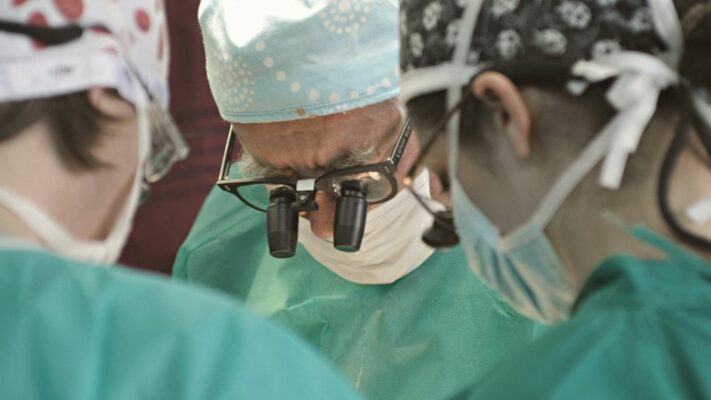


Prof. Dr. Serdar Nasır
Specialist in Plastic, Reconstructive and Aesthetic Surgery, Hand Surgery
Specialist in Plastic, Reconstructive and Aesthetic Surgery, Hand Surgery
He completed his medical education at Ankara University Faculty of Medicine in 1996 and his specialty training between 1996–2002 at Hacettepe University Faculty of Medicine, Department of Plastic, Reconstructive and Aesthetic Surgery.
Between 2002–2009, he worked at Süleyman Demirel University Faculty of Medicine, Department of Plastic, Reconstructive and Aesthetic Surgery.
Since 2009, he has been working at Hacettepe University Faculty of Medicine, Department of Plastic, Reconstructive and Aesthetic Surgery. He received the title of Associate Professor in 2011. In 2019, Dr. Nasır became a Professor and continues to work as a faculty member in this position.
View MoreWhat Is Hand Surgery?
Hand surgery is the medical specialty focused on diagnosing and treating disorders and injuries of the hand, wrist, and forearm involving bones, tendons, nerves, blood vessels, and soft tissues. Conditions such as trauma, nerve compressions, tendon injuries, congenital anomalies, and degenerative diseases are evaluated within this scope. The goals are to reduce pain, restore function, and help patients maintain daily life activities at the highest possible level.
Why is hand surgery considered one of the most delicate fields within plastic surgery?
Many people associate plastic surgery only with rhinoplasty or facelift procedures. However, the foundation of plastic surgery is reconstruction—repair and restoration. Hand surgery is the peak expression of this reconstructive philosophy. The hand contains an extraordinary density of structures in a very small space. Just beneath the skin, tendons, nerves, vessels, and bones lie millimeters apart, functioning together like a precision timepiece.
Surgery in this region cannot be approached like a rough repair job. Fixing a bone with a plate is not enough; you must also preserve the tendon’s smooth gliding surface, the nerve’s signal transmission, and the skin’s elasticity. Plastic surgeons are trained with a “respect for tissue” principle. Minimizing scarring, protecting tissue vitality, and combining function with aesthetics are inherent to the discipline. Even a simple incision in hand surgery must be planned so it does not limit movement later. That is why hand surgery demands microscopic precision and is, in many ways, a true form of “human engineering.”
Why is timing so critical in traumatic hand injuries?
Hand injuries are among the most common reasons for emergency department visits, ranging from household accidents to workplace trauma. In these situations, the greatest enemy is time. The hand is supplied by very small arteries. If these vessels are damaged by a cut, crush injury, or amputation, blood flow to the tissues can stop—this is called “ischemia.”
Tissues can survive without oxygen only for a limited period, and this window is even shorter when muscle is involved. As time passes, tissues may begin to die irreversibly. In nerve lacerations, the cut ends can also retract and separate, making repair technically more difficult. Every minute between injury and surgery can reduce the hand’s future potential. That is why “waiting to see if it improves” is not an option in serious hand trauma. Rapid transfer to a properly equipped microsurgical center is one of the most decisive factors for recovery.
What should be done at the scene if a finger or limb is amputated?
Complete amputations are extremely traumatic and often cause panic. However, staying calm and applying correct first aid can determine whether the amputated part can be replanted. The goal is to preserve tissue viability using the “cold ischemia” principle. The most common mistake is placing the amputated part directly on ice or in water, which can freeze or macerate the tissue and drastically reduce replantation success.
Recommended steps are:
- Wrap the part in a clean, moist gauze
- Place it in a clean, waterproof bag and seal it
- Put that bag into a second bag or container with ice water
This keeps the tissue cool without soaking or freezing it. For the patient’s bleeding wound, apply direct pressure with a clean cloth and go to the nearest medical facility immediately. Tourniquets can damage tissue and should be used only in life-threatening, uncontrolled bleeding, and only if applied correctly.
How does the replantation process work?
Replantation—reattaching an amputated part—is among the most advanced, complex, and time-consuming procedures in hand surgery. It is team-based and can take 10–12 hours. Under an operating microscope, vessels and nerves that are difficult to see with the naked eye must be repaired with patience and high technical skill.
The sequence is usually systematic. First, the skeletal framework is stabilized (bones are fixed with wires or screws). Next, tendons are repaired to restore movement. The most delicate phase is vascular repair: arteries and veins are connected with sutures finer than a hair. When blood flow returns, the pale, lifeless finger often becomes pink and warm within minutes—an extraordinary moment for the surgical team. Finally, nerves (for sensation) and skin are repaired. Success depends on the injury mechanism (clean cut vs crush), the patient’s age, smoking status, and—most importantly—how well the amputated part was preserved.
Will the hand return to normal after nerve and tendon repair?
This is one of the most common patient concerns. The answer is both yes and no—because recovery depends not only on the surgeon’s repair but also on the body’s biological healing capacity. Tendons can be thought of as puppet strings that transmit motion to the fingers. When they are cut, the finger cannot move. During repair, the balance is delicate: sutures must be strong enough not to fail, yet fine enough to allow the tendon to glide smoothly within its sheath.
Nerves are more complex. You can think of them like electrical cables. When a nerve is repaired, the ends are brought together—but signals do not return instantly. Nerve fibers must regrow from the repair site down to the fingertips, at an average rate of about 1 mm per day. That means sensation after a wrist-level cut may take months to reach the fingertips. Patience and consistent therapy are essential. Children and younger patients often recover more fully, while older patients and crush-type injuries may leave some residual numbness or motion limitation.
What conditions can numbness and tingling in the hand indicate?
Modern technology use and repetitive movements have increased the frequency of nerve compression syndromes (“entrapment neuropathies”). Numbness is often the nerve’s distress signal. Nerves pass through narrow tunnels formed by bones and connective tissue. Swelling or thickening in these tunnels can compress the nerve.
Common symptoms include:
- Pain that wakes you up at night
- A “cotton-like” numbness in the fingertips
- Morning swelling sensation in the hands
- Difficulty with fine motor tasks
- Dropping objects
- Muscle wasting in the palm
The most common condition is Carpal Tunnel Syndrome, where the median nerve is compressed at the wrist—typically causing numbness in the thumb, index, and middle fingers. Another frequent condition is Cubital Tunnel Syndrome, where the ulnar nerve is compressed at the elbow, causing numbness in the ring and little fingers. These symptoms should not be ignored: early cases may improve with splinting and medication, while delayed cases can lead to permanent nerve damage.
Contact us to get information about treatments and create an appointment!
What advantages does endoscopic carpal tunnel surgery offer?
In traditional open surgery, the tunnel is accessed through an incision at the base of the palm. While effective, it can leave a sensitive scar in a high-contact, load-bearing area, causing pain during healing and delaying hand use. With technological advances, “endoscopic” (closed) techniques have become more prominent.
Advantages of the endoscopic method include:
- Minimal surgical incision
- Less tissue trauma
- Lower postoperative pain
- Faster recovery
- Earlier return to work
- A subtle, cosmetically favorable scar
In this technique, a small (~1 cm) entry point is made at a wrist crease, and a camera system is inserted. The surgeon sees the nerve and the compressing ligament clearly on a screen, then cuts the ligament from inside with special instruments to release the nerve. Because there is no large skin incision, anatomical integrity is preserved. This approach can be especially comfortable for office workers, musicians, and those who rely heavily on hand function.
Can trigger finger and De Quervain’s disease improve without surgery?
Mechanical problems often require mechanical solutions. Trigger finger occurs when the flexor tendon gets stuck at its entry point in the palm (the pulley system). The finger bends, but it catches when extending and may release with a snapping sensation. De Quervain’s disease causes severe pain at the base of the thumb and along the wrist side—commonly affecting new mothers during lifting and repetitive hand use.
In early stages, options may include:
- Rest splints
- Anti-inflammatory medications
- Local corticosteroid injections
- Physical therapy
However, these measures do not always provide a permanent solution. If pain and catching persist, surgery is the most definitive treatment. The procedure is usually performed under local anesthesia and takes about 10–15 minutes. The tight sheath/pulley causing the entrapment is released. Patients can often move the finger comfortably immediately and return home the same day—small interventions with a big quality-of-life payoff.
Do hand swellings and lumps carry a cancer risk?
Noticing a new lump in the hand can understandably raise worry. The good news is that most hand masses are benign. The most common are ganglion cysts—often on the back of the wrist or sometimes in the palm. They are fluid-filled sacs containing thick, jelly-like joint fluid. Although often called “nerve cysts” colloquially, they are not actually related to nerves.
Other possible masses include:
- Giant cell tumor of the tendon sheath
- Lipomas
- Enchondromas (bone cysts)
- Vascular malformations
The likelihood of malignancy is low, but these masses should not be ignored, as they can grow, compress nerves, cause pain, or create an undesirable appearance. The old practice of “hitting” a ganglion to burst it is unsafe and can damage tissues. Definitive treatment is surgical removal, ideally excising the cyst with its capsule. Any removed tissue should be sent for pathological examination to confirm the diagnosis.
When should congenital hand anomalies be treated?
Some babies are born with structural differences in their hands. While this can be distressing for parents, modern surgical techniques can achieve very successful results. Two common anomalies are syndactyly (webbed/fused fingers) and polydactyly (extra fingers).
Timing is important. Surgeons usually wait until the child can safely undergo anesthesia but before hand function and brain motor development are fully established. The ideal window is often between 6 months and 2 years of age. The goal is to achieve a hand that is as functional and aesthetically normal as possible before school age and early social awareness.
Surgical goals include:
- Ensuring independent finger movement
- Improving grip function
- Reducing psychological impact
- Improving appearance
In syndactyly surgery, the fingers are separated and skin deficits are often covered with small skin grafts (commonly taken from the groin). In polydactyly, the nonfunctional extra digit is removed and supporting structures are repaired to preserve balance and function. Early intervention plays a key role in a child’s long-term confidence and development.
Contact Us!
Contact us to get information about treatments and create an appointment!
What are flap surgery and microsurgery for tissue loss?
In some cases—after trauma, tumor removal, or burns—tissue loss in the hand can be so extensive that primary closure is impossible. When bones or tendons are exposed, transferring tissue from another part of the body becomes necessary. This is called “flap surgery.” A flap is different from a simple skin graft; it is living tissue transferred with its own blood supply.
These methods may include:
- Local flaps
- Regional pedicled flaps
- Free tissue transfer
Free tissue transfer represents the highest level of microsurgery. For example, a segment of muscle and skin from the thigh or back can be completely detached with its vessels, brought to the hand, and revascularized by connecting arteries and veins under a microscope. With this approach, a hand or finger that might otherwise require amputation can sometimes be salvaged. Flap surgery is not merely “closing a wound,” but a reconstructive rebuilding process grounded in tissue engineering principles.
Is it possible to rejuvenate hands with aesthetic procedures?
We often care for our face more than our hands, yet hands are among the most honest indicators of age. Over time, subcutaneous fat decreases, the skin becomes thinner and drier, and veins, tendons, and bones become more visible—creating a “skeletal” appearance. Sun damage may also cause brown age spots on the back of the hands.
Hand rejuvenation treatments address these concerns with combined approaches. One of the most popular and effective is fat transfer. A small amount of fat (usually taken from the abdomen or hips) is processed and purified before being injected.
Benefits of fat transfer include:
- Restoring lost volume
- Camouflaging prominent veins and bones
- Improving skin quality
- Rejuvenation effects associated with regenerative components
For surface pigmentation and fine lines, laser treatments, chemical peels, or mesotherapy can be used. These procedures are typically performed under local anesthesia, are generally comfortable, and have short recovery times. The result is fuller, smoother, and more even-toned hands.
Why is postoperative rehabilitation “half of the treatment”?
In hand surgery, a successful operation is only the beginning. Even a perfectly repaired tendon or nerve can become functionally limited if rehabilitation is neglected. The hand is prone to stiffness and motion loss. Immobilization can lead to joint stiffness and tendon adhesions.
That’s why surgeons and hand therapists work closely together. Customized splints are often prepared after surgery. Rehabilitation may start within days and continue for weeks.
Rehabilitation commonly includes:
- Swelling control
- Scar massage
- Passive range-of-motion exercises
- Active strengthening
- Sensory re-education
Frequently Asked Questions
In which conditions is hand surgery performed?
Hand surgery is performed for trauma (fractures, cuts, crush injuries), tendon and nerve injuries, nerve compression syndromes (carpal tunnel syndrome), congenital anomalies, rheumatic deformities, and tumors in the hand region.
How do tendon lacerations affect hand function?
Tendons transmit movement from muscles to the fingers and wrist. When a tendon is cut, the related finger or wrist cannot move. Without surgical repair, permanent loss of motion may occur.
What is the recovery process after hand nerve injuries?
Recovery after nerve repair is slow. Depending on the nerve type and injury severity, return of sensation and movement may take months.
How is carpal tunnel syndrome treated surgically?
The ligament compressing the median nerve at the wrist is released. Performed under local or general anesthesia, this procedure significantly reduces numbness, pain, and weakness in most patients.
Is replantation possible after finger amputation?
Yes. If conditions are appropriate and intervention is timely, a finger can be replanted using microsurgical techniques, including vessel, nerve, and tendon repair.
Why is microsurgery important in hand surgery?
Microsurgery enables repair of extremely small vessels and nerves, helping restore circulation, sensation, and movement to the highest possible level.
Can congenital hand anomalies be corrected surgically?
Yes. Congenital anomalies such as syndactyly (webbed fingers) and polydactyly (extra finger) can be corrected in childhood to achieve improved hand function.
How do rheumatic diseases deform the hand?
Rheumatic diseases can cause joint and tendon deformities, pain, and motion limitation. Surgery can correct deformities, reduce pain, and improve function.
Is physical therapy necessary after hand surgery?
Yes. Regular therapy after surgery is essential to regain range of motion, grip strength, and fine hand skills.
How can hand injuries affect a patient psychologically?
Because hand function directly affects daily and professional life, injuries can lead to stress, reduced confidence, and loss of independence. Successful surgery and rehabilitation also support psychological recovery.