

 Türkçe
 Deutsch
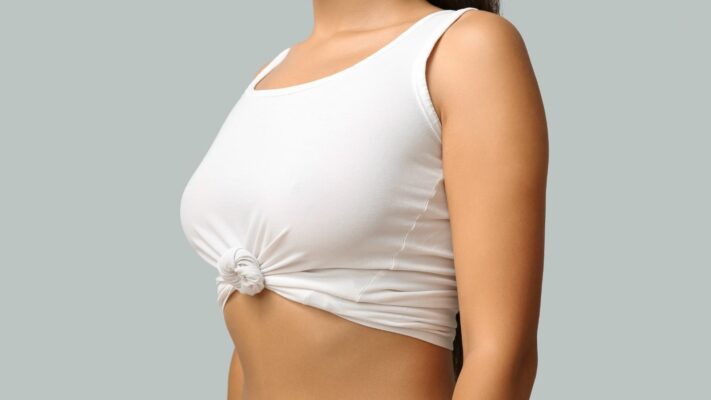
Breast aesthetics encompasses surgical procedures performed to correct the size, shape, and position of the breasts. With different techniques such as breast augmentation, reduction, and lifting, the goal is to achieve aesthetic and natural-looking breasts that suit the person’s body structure.
Breast augmentation surgery is generally performed with silicone implants. With this procedure, volume is added to the breast, asymmetry is corrected, and a fuller appearance is achieved. Implant placement can be planned either under or over the muscle and is shaped according to the patient’s expectations.
Breast reduction surgery is performed to eliminate physical complaints such as back and neck pain caused by large breasts. By removing excess tissue, the breast form is reduced and made proportionate to the body. A lift can also be performed at the same time.
Breast lift (mastopexy) is the procedure of reshaping sagging breast tissue. The nipple is repositioned upward, excess skin is removed, and the breast gains a firmer appearance. It can be performed alone or combined with an implant.
| What You Need to Know | Information |
| Definition | Breast aesthetics is the general name for surgical procedures performed to change the size, shape, position, or symmetry of the breasts. It can be performed for aesthetic purposes as well as for functional or reconstructive purposes. |
| Purpose | To increase breast volume (augmentation), reduce it (reduction), correct sagging (lifting), eliminate breast asymmetry, and correct breast deformities after childbirth and breastfeeding. |
| Types of Procedures | Breast augmentation (with implants or fat transfer), breast reduction, breast lift (mastopexy), breast reconstruction, gynecomastia surgery in men. |
| Type of Anesthesia | It is usually performed under general anesthesia. In minor interventions, local anesthesia + sedation may be preferred. |
| Operation Duration | Depending on the procedure, it takes an average of 1.5–3 hours. |
| Recovery Process | Swelling and tenderness may be seen within the first 1–2 weeks. Wearing a medical bra is recommended for 4–6 weeks. Returning to daily life is usually possible within 1 week. |
| Risks and Complications | Infection, bleeding, capsular contracture (hardening around the implant), loss of sensation, wound opening, asymmetry, implant displacement or sagging, scarring. |
| Duration of Results | In breast augmentation, implants are long-lasting but not guaranteed for life (replacement may be required within 10–15 years). The effects of other procedures may diminish over time with aging and gravity. |
| Eligibility Criteria | Individuals who are not satisfied with their breast shape, who have developed deformity after childbirth/breastfeeding, who are in good general health, and who have realistic expectations. |
| Preoperative Preparation | Breast examination, ultrasonography or mammography (when necessary), blood tests, selection of implant or procedure type according to body measurements, smoking cessation. |
| Postoperative Care | Wearing a medical bra, restricting arm movements, performing stitch and wound care, avoiding physical activities, regular follow-ups. |
| Alternative Options | Temporary volume increase with fillers (limited effect), push-up underwear, strengthening muscles with exercise (does not increase volume, only strengthens muscles). |
| Evaluation Process | A detailed evaluation is performed according to breast volume, symmetry, skin elasticity, and the patient’s expectations; implant selection or surgical method is decided. |



Prof. Dr. Serdar Nasır
Specialist in Plastic, Reconstructive and Aesthetic Surgery, Hand Surgery
Specialist in Plastic, Reconstructive and Aesthetic Surgery, Hand Surgery
He completed his medical education at Ankara University Faculty of Medicine in 1996 and his specialty training between 1996–2002 at Hacettepe University Faculty of Medicine, Department of Plastic, Reconstructive and Aesthetic Surgery.
Between 2002–2009, he worked at Süleyman Demirel University Faculty of Medicine, Department of Plastic, Reconstructive and Aesthetic Surgery.
Since 2009, he has been working at Hacettepe University Faculty of Medicine, Department of Plastic, Reconstructive and Aesthetic Surgery. He received the title of Associate Professor in 2011. In 2019, Dr. Nasır became a Professor and continues to work as a faculty member in this position.
View MoreWhat Is Breast Aesthetics?
Breast aesthetics is the field of aesthetic surgery that includes surgical and non-surgical applications aimed at improving the size, shape, and position of the breasts. Breast augmentation, reduction, lifting, and reconstruction are among the most commonly performed procedures. These interventions aim to correct conditions such as congenital deformities, volume loss, asymmetry, or sagging. The goal is to achieve a natural and balanced appearance that suits the patient’s anatomical structure and expectations.
How Are Implant Selection and Shape Determined in Breast Augmentation Surgery?
The issue that patients considering breast augmentation struggle with the most, and sometimes think about for days, is generally implant selection. Questions like “Should it be round or teardrop?” and “300 cc or 350 cc?” are constantly asked. The most important rule to know here is this: There is no such thing as the best implant; there is the implant that is “most suitable for your body.” The secret of success lies in placing the implant that best fits the patient’s chest morphology into the most correct plane.
The implant technology we use today has reached an incredible level in terms of safety and longevity. The cohesive gel structure inside new-generation implants ensures that the implant maintains its integrity and largely eliminates old fears such as rupture and leakage. However, the most important factor that comes into play on the aesthetic side of the matter is the choice of shape. Here we have two main players: Round implants and Anatomical (Teardrop) implants.
Teardrop implants, as the name suggests, have a form similar to a drop of water; the lower part is fuller, while the upper part is thinner. If a patient says, “I don’t want anyone to realize I had surgery; I don’t want my upper breast to look swollen; I want it to slope naturally,” teardrop models are a great option. Especially in thin patients with very little breast tissue and a bony chest, I often prefer this model so that the edges of the implant are not noticeable.
On the other hand, there are round implants. This model is the favorite of patients who want fullness especially in the cleavage area. Round implants provide the breast with a slight “push-up,” that is, a lifting effect. In patients who have given birth and have lost fullness in the upper part of the breast after breastfeeding (a condition we call the “deflated orange” appearance), round implants are much more effective in restoring that lost upper fullness. In addition, in patients with an athletic body type and broad shoulders, round contours offer a more balanced appearance.
Some basic criteria we consider in implant selection are:
- Amount of existing breast tissue
- Skin elasticity and thickness
- Chest width
- Breast base width
- The patient’s height-to-weight ratio
- Hip width
- Shoulder structure
As surgeons, when deciding, we perform a simple examination called the “Pinch Test,” in which we measure the thickness of the skin and breast tissue. This test shows us the quality of the tissue that will cover the implant. If your tissue is very thin, choosing an overly firm or very large implant may lead to rippling of the implant edges over time. Therefore, the process is not only about choosing volume but also about determining the safest limit by respecting the tissue.
Why Is the Dual-Plane Method the Gold Standard in Breast Aesthetics?
Technical details can sometimes be confusing for patients, but understanding the Dual-Plane technique is very important to understand why the result looks natural. In the past, surgeons would place the implant either completely under the breast tissue (over the muscle) or completely under the chest muscle (under the muscle). Both methods had significant downsides. With implants placed over the muscle, recovery was faster, but in thin patients the implant could look obvious “like a ball.” With implants placed under the muscle, the implant was well hidden, but problems such as implant movement when moving the arm (dynamic deformity) could occur.
The Dual-Plane technique is a revolutionary approach that takes the best features of these two methods and discards their disadvantages. In this technique, the upper part of the implant is placed under the chest muscle (pectoralis muscle). Thus, in the cleavage area, the implant edges are covered by the muscle and that feared artificial transition never occurs. The lower part of the implant, on the other hand, is freed under the breast tissue rather than under the muscle. In this way, the lower part of the implant is not compressed by the muscle, and the lower half of the breast can round out naturally.
The greatest comfort this technique provides to patients is a natural appearance. You do not feel the implant when you touch it, and you do not see a muscular-looking structure from the outside. It also minimizes the risk of capsular contracture, which is hardening. Because a large surface of the implant is in contact with the muscle tissue, which has very good blood supply and is under a constant massage effect. By releasing the muscle attachment points during surgery, we can also move the inframammary fold line to the level we want. In other words, with this method, it is possible to achieve both breast augmentation and a mild lifting effect at the same time.
Which Techniques and Pedicle Choices Are Prominent in Breast Reduction Surgeries?
Breast reduction surgeries are perhaps the procedures in aesthetic surgery that make patients the happiest and make them say, “I wish I had done this years ago.” Because large breasts are not only an aesthetic concern but also a serious physical burden. Neck herniation, hunching of the back, deep grooves on the shoulders caused by bra straps, and persistent rashes under the breast significantly reduce patients’ quality of life. This surgery is an operation of getting rid of a burden and gaining freedom.
As surgeons, our greatest responsibility in this surgery is to move the nipple-areola complex to its new position while preserving its blood supply and sensation. This is where the concept of the “pedicle” comes into play. The pedicle is the living tissue bridge that carries the vessels and nerves feeding the nipple and must not be disrupted. Which pedicle is chosen depends on how saggy the breast is and how much reduction will be performed.
If the patient’s breasts are very large and the nipple is very low, in the past, the technique we call the “Inferior Pedicle,” where the blood supply comes from below, was often used. It is a safe method; however, over the years it may cause the lower part of the breast to sag (bottoming out) due to gravity. For this reason, today, in modern surgery, we mostly prefer the “Superomedial Pedicle” technique. In this technique, the nipple receives its blood supply from the upper and inner part. What does this provide us? It helps the upper part of the breast remain fuller and prevents that “deflation” appearance from developing over time. With your own tissue, we create a kind of “internal bra.”
The complaints we frequently see in patients who are candidates for breast reduction surgery are:
- Chronic neck and back pain
- Bra strap marks on the shoulders
- Fungal infections and rashes under the breast
- Inability to find and wear the clothes they want
- Limitations in physical activities
- Posture disorders
- Deterioration in sleep quality
This surgery not only reduces the breast but also lifts it and gives it shape. After surgery, our patients continue their lives with a lighter body and an improved posture.
Contact us to get information about treatments and create an appointment!
How Are Surgical Scars and Scar Management Planned?
In aesthetic surgery, scars are the topic where we must be the most transparent with our patients. Unfortunately, there is no such thing as “scarless breast aesthetics”; however, there are “hidden scars.” The surgeon’s skill lies in minimizing visibility by concealing these scars within the patient’s anatomical folds. The scar pattern to be used depends entirely on the amount of skin to be removed and the degree of sagging in the breast.
If the patient’s breast is not very saggy and only a tightening will be performed, we prefer the scar we call the “Lollipop” (vertical) scar. This scar consists of a vertical line starting around the nipple and extending downward. Since there is no horizontal incision under the breast, the healing process is more comfortable and the scar burden is less. At first, the skin in the area of the vertical scar may look slightly puckered; we call this “bunching.” But don’t worry, this improves over the months as the skin relaxes and becomes smooth.
However, if the breasts are very large, the skin quality is poor, and a significant amount of tissue needs to be removed, the method we call the “Inverted-T” (Anchor) becomes unavoidable. In this method, in addition to the scar around the nipple and the vertical scar, there is also a horizontal scar in the inframammary fold. My patients usually fear this horizontal scar. But it should not be forgotten: Since this scar lies right in the inframammary crease line, it is not visible from the front even when nude; it is only noticeable when viewed from below. Also, compared to the visual disturbance created by a shapeless and excessively large breast, a thin line is an acceptable trade-off for our patients.
The quality of scars also depends on your genetic structure, but as surgeons we use the best suture materials and techniques. In the postoperative period, we recommend silicone gels and tapes for the scars to fade. Patience is required; scars are red in the first months, but by the end of the first year they blend with the skin tone and become less noticeable.
In Which Situations Are Composite Breast Aesthetics and Autologous Fat Transfer Used?
One of the most popular approaches in recent years is “Hybrid” or “Composite” breast aesthetics. This method combines the guaranteed volume provided by silicone implants with the softness and naturalness provided by the patient’s own fat tissue. I consider this method a lifesaver especially in thin patients we call “size zero,” whose tissue is very thin.
When we place silicone in very thin patients, due to the thinness of the skin, the edges of the implant may be palpable or rippling may be seen in the cleavage area. This is where the patient’s own fat comes into play. We usually harvest fat from the abdomen, waist, or hip area using Vaser Liposuction technology. Since Vaser uses ultrasonic sound waves, it gently dislodges fat cells without damaging them. In this way, the fat we harvest remains viable.
We process and purify this “yellow gold” fat through special procedures and inject it over the implant, under the skin. Thus, the implant is covered with the patient’s own living tissue. The result? When you touch it, you feel soft tissue, not silicone. In addition, with this method, it is also possible to correct mild asymmetries and to narrow the gap between the two breasts (cleavage).
The donor areas we most commonly use for fat harvesting are:
- Abdomen
- Waist area (love handle area)
- Hips
- Inner thighs
- Inner knees
This procedure can be used not only with implants but also alone in patients who want small augmentations. However, there is a detail patients should know: Not all of the transferred fat is permanent. The body retains a portion of this fat (around 40–60%) and absorbs the rest. For this reason, sometimes the procedure may need to be repeated after 6 months or 1 year. In addition, if there is significant sagging in the breast, fat injection does not lift the breast; it must definitely be combined with a lifting procedure.
How Do 3D Simulation Technology and Radiological Screenings Guide the Process?
Technology is now an integral part of surgery. The biggest concern of my patients is the question, “What if the result is not as I imagined?” In the past, we could only answer this verbally; now we can demonstrate it visually. 3D simulation devices (such as Vectra and Crisalix) scan the patient’s body and create a digital twin.
Thanks to this simulation, the patient can virtually try different implant sizes on their own body. How would it look with 300 cc? How would it look with 375 cc? Which suits better—round or teardrop? This technology brings together the patient’s expectations and what the surgeon can achieve on a common ground. When the patient says “I want it big,” we can see what they mean, and when we say “this size would be too much,” we can explain why visually.
However, health always comes before aesthetics. The breast is one of the most sensitive organs of the female body and carries a cancer risk. Therefore, our preoperative radiological screening protocols are very strict. Our aim is not only to beautify the breast but also to ensure that it is healthy.
Our radiological screening methods by age and risk are as follows:
- Routine breast ultrasonography in patients under 40
- Mammography and ultrasonography in patients over 40
- Breast MRI in those with a family history of breast cancer
- Detailed screening in those with high-risk genetic mutations
- Biopsy in the presence of a suspicious mass
If a suspicious mass or cyst is detected in the preoperative screening, the aesthetic plan is put on hold and the focus shifts to diagnosis first. In addition, if we are going to perform fat injection, having a “baseline image” before surgery is vital. Because in the future, radiologists need an old image to compare so that calcifications that may occur due to fat necrosis are not confused with signs of cancer:
Contact Us!
Contact us to get information about treatments and create an appointment!
What Are Capsular Contracture and Other Possible Risks?
Every surgical procedure has a biological cost and risk. I always explain this clearly to my patients. The most discussed topic in breast implant surgeries is “Capsular Contracture.” In fact, our body has a very intelligent mechanism; it covers every foreign object placed inside it (this can be a pacemaker, a dental prosthesis, or a breast implant) with a membrane. We call this the “capsule.” This is a normal and healthy process; it even helps the implant stay fixed in place.
However, sometimes, for unknown reasons or due to triggers such as infection or blood accumulation, the body thickens and tightens this membrane more than necessary. The capsule begins to compress the implant. In this case, the breast becomes hard, its shape may be distorted, and it can become painful. We call this capsular contracture. In early stages, it may regress with massage and medications, but in advanced stages it is necessary to surgically remove that hardened capsule. In modern medicine, textured-surface implants and the Dual-Plane technique have significantly reduced this risk.
Another important issue is smoking. Especially in breast lift and reduction surgeries, the blood supply of the nipple is vital. Smoking is the biggest enemy that blocks capillaries. In patients who smoke, the risk of wound-healing problems in the nipple, and even tissue loss (necrosis), increases manyfold. Therefore, we require absolute smoking cessation for at least 3–4 weeks before and after surgery.
Other possible complications and their signs are:
- Hematoma (blood accumulation in tissue)
- Seroma (fluid accumulation in tissue)
- Signs of infection
- Temporary or permanent loss of sensation in the nipple
- Delayed wound healing
- Asymmetry issues
These risks should not scare you; with an experienced surgeon, sterile hospital conditions, and the patient’s adherence to the rules, these risks are minimized.
What Should Be Considered During Recovery and What Are the Restrictions?
When the surgery is over, it does not mean the job is done; in fact, it means it is just beginning. The recovery period is a phase that requires patience and care. After breast aesthetics, our patients are usually discharged the same day or the next day. A certain amount of pain and tightness is normal in the first 2–3 days, and a comfortable process is managed with painkillers during this period.
By the end of the first week, our patients can usually return to their social lives and desk jobs. However, the process we call “full recovery,” in which the tissues settle, can take 6 months, even up to 1 year. During this time, your most loyal friend will be the “medical bra” we will have you wear. This bra keeps the breast in the ideal position, reduces swelling, and prevents the implant from shifting. For about 4–6 weeks, you need to use this bra day and night (except for bathing).
The issue my patients struggle with the most is sleeping position. In order to prevent the implants from shifting and for the pockets to heal properly, we ask you to sleep on your back for the first 6 weeks. Sleeping face down is strictly forbidden, and side sleeping can be resumed after a certain period with your doctor’s approval.
The restrictions to be observed during recovery are:
- Lifting heavy objects in the first 6 weeks
- Excessively reaching up or straining the arms
- Sleeping face down
- Using wired and underwired bras in the first 2 months
- Sports that work the pectoral muscle such as push-ups and pull-ups
- Extremely hot environments such as Turkish baths and saunas
- Direct sunbathing before the scars heal
Frequently Asked Questions
For what purposes is breast aesthetics performed?
It is performed to augment, reduce, lift, or correct deformities of the breasts. In addition to aesthetic expectations, it may also be preferred to relieve physical complaints such as back, neck, and shoulder pain.
What types of implants are used in breast aesthetics?
Implants containing silicone gel or saline (saltwater) are used. In terms of shape, there are round and teardrop (anatomical) implant options. The choice is determined according to the patient’s body structure and aesthetic expectations.
Is breastfeeding possible after breast aesthetics?
As long as the breast tissue and milk ducts are not damaged, breastfeeding is often possible. Especially in augmentation surgeries performed with an incision under the breast, the risk related to breastfeeding is quite low.
Can breast augmentation and lifting be performed at the same time?
Yes, volume enhancement and correction of sagging can be combined in the same session. This approach provides a more aesthetic, lifted, and youthful breast appearance.
What health benefits does breast reduction surgery provide?
Back, neck, and shoulder pain caused by heavy breasts decreases; posture disorders improve, and problems such as skin irritation disappear. It provides relief in daily life and sports activities.
Will there be scars after breast aesthetics?
Yes, because it is a surgical procedure, scars do form. However, incision sites are usually hidden within natural folds, and scars become less noticeable over time. If necessary, scars can be further faded with laser treatments.
How long do implants last after breast aesthetics with implants?
Modern silicone implants are highly durable and do not necessarily need to be replaced after a specific period. However, regular check-ups every 10–15 years are recommended.
When can you return to normal life after breast aesthetics?
Patients can usually return to their daily lives within 3–7 days. For sports, heavy lifting, and intense activities, it is necessary to wait 4–6 weeks.
Is there a loss of breast sensation after aesthetic breast surgery?
Temporary reduced sensation may occur, especially around the nipple. In most patients, sensation returns to normal within a few months. Permanent loss of sensation is rare.
What psychological benefits does breast aesthetics provide?
It increases self-confidence, positively changes body image, and provides comfort in clothing choices. Especially after childbirth or weight changes, satisfaction levels increase significantly.